CATR@P at NYCU: A Powerful Partner that Assists Government in Promoting Technology Care
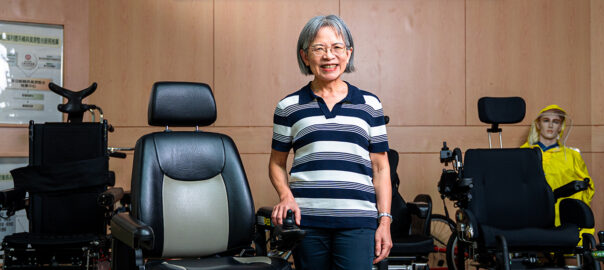
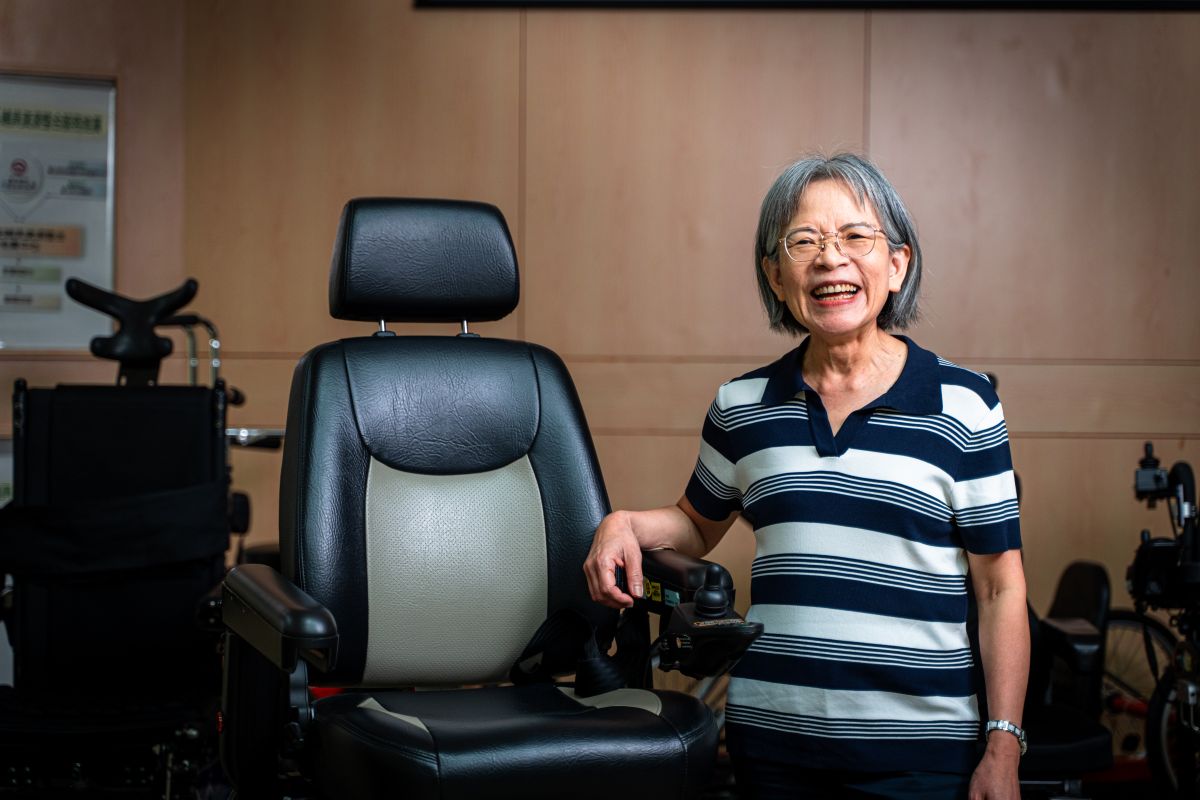
The Research Center on International Classification of Functioning, Disability, and Health (ICF) and Assistive Technology at NYCU under the leadership of Professor Shwn-Jen Lee, has advanced policies, facilitated industry-government-academic collaborations, and created platforms to highlight Taiwan’s innovation in assistive technology. (Photo from ZDunemployed studio)
Since its establishment in 2001, the “Research Center on International Classification of Functioning, Disability, and Health (ICF) and Assistive Technology” at National Yang Ming Chiao Tung University (NYCU) has been tasked by the Department of Social Affairs of the Ministry of the Interior (now the Department of Social and Family Affairs Administration of the Ministry of Health and Welfare) to create and operate the “Center for Assistive Technology Resources and Popularization (CATR@P).” This Center is the only national-level unit established by the central government to integrate and promote assistive devices.
Over the past 23 years, the Center has been dedicated to assisting the government in promoting technology-assisted living, integrating assistive device resources, formulating policies, and promoting domestic and international exchanges and cooperation among industry, government, universities, and research institutes, making the Center a key think tank in the field of assistive technology. The driving force behind all this is Professor Shwn-Jen Lee of the Department of Physical Therapy And Assistive Technology of NYCU.
The Research Center at NYCU has become a key national think tank, advancing assistive technology and policies to support the physically challenged and elderly. (Photo from ZDunemployed studio)Building National Level Essential Think TankThe current director of the Center, Prof. Shwn-Jen Lee, with short, sleek, silver-white hair, was a practicing physical therapist in the U.S. in the 1980s. After finishing her studies, she returned to Taiwan to teach at the College of Medicine of National Yang-Ming University in 1992. She was invited to join the CATR@P in 2001 by the Center’s first director, Professor Cheng-Kung Cheng of the Institute of Biomedical Engineering. Since taking over the director’s position in 2005, Prof. Lee has devoted almost all her time and efforts to the Center. Today, the CATR@P located in the East Campus of Taipei Veterans General Hospital not only displays more than 700 assistive devices but also provides training and guided tours in assistive technology for students from colleges and universities, as well as domestic and international organizations, and has become an essential think tank for developing and promoting national policies based on its rich research results on policy and regulatory practices.“I have been operating the Center with my life,” Prof. Lee said with conviction as she looked back. She firmly believes that promoting assistive technology and serving the physically challenged and the disabled elderly is an indispensable infrastructure for society. In 2005, she wrote a white paper on national assistive technology policy; in 2007, she assisted the Bureau of Standards, Metrology & Inspection, M.O.E.A., ROC in translating the ISO 9999 into Taiwan’s national standard, CNS 1539; in 2008, she was commissioned by the Department of Health to translate the WHO’s International Classification of Functioning, Disability, and Health (ICF) and to develop the ICF welfare need assessment tool. Since 2012, this tool has been widely used in 22 counties and cities across the country to assess the welfare needs of the physically challenged.
In 2007, she led her graduate students to conduct an in-depth investigation into the operation of county and municipal assistive device centers, assisted in developing an evaluation indicator draft for county and municipal assistive device centers based on academic and scientific methodology, facilitated the central government’s service examination trial of county and municipal assistive devices in 2010, and further promoted the implementation of five relevant central regulations in 2012, realizing the legalization of the county and municipal assistive device centers’ services and resources.
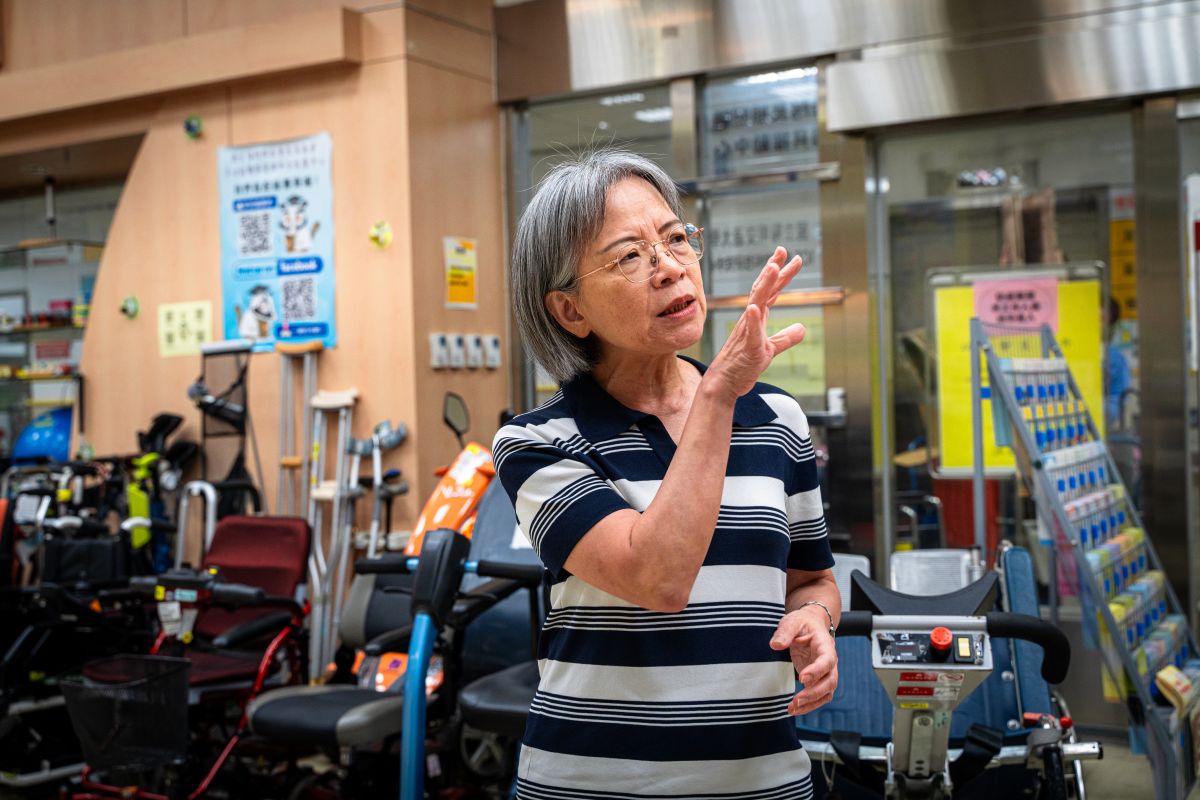
Gathering a group of graduate students, Prof. Lee spearheaded efforts to evaluate and standardize county and municipal assistive device centers, culminating in the legalization of their services and resources through central regulations by 2012 (Photo from ZDunemployed studio)
Constructing a Comprehensive Assistive Device Resource Platform and International Exhibition to Showcase Taiwan’s Strength in Assistive Devices
The CATR@P assists the Ministry of Health and Welfare in establishing the data of the “Resource Portal of Assistive Technology,” which integrates professional information on nearly 5,000 types of assistive device products, ranging from small devices such as hearing aids and small magnifiers to big devices such as exoskeletal robots and welfare vehicles, and also incorporates assistive device application and tracking services, serving as a bridge between the government, users, and vendors. The website has been online for 18 years and has accumulated 870 million views. To get closer to the public, the Civet mascot— the “Dr. Assistive Device”— is an anthropomorphic character that promotes using assistive devices in terms of safety, parenting, etc., and other information on subsidies, translating professional knowledge into understandable information. “We are paving the future infrastructure for Taiwan’s society,” said Prof. Lee, the Center director.
Assistive Technology for Life (ATLife), launched in 2016, is Taiwan’s leading exhibition on technology care, uniting industry, government, academia, and healthcare. (Photo from ZDunemployed studio)
To break through the echo chamber and let more people understand the importance of technology care, Prof. Lee opened Taiwan’s first large-scale technology care exhibition—”Assistive Technology for Life (ATLife),” in 2016. The exhibition has attracted domestic and international exhibitors and professionals to participate since it moved to the Taipei Nangang Exhibition Center in 2018. In 2024, it has returned to the visiting scale of nearly 120,000 visitors, making it the most authoritative exhibition platform for industry, government, universities, research institutes, and medical care institutes in Taiwan.
There have been skeptical voices that investing a lot of resources in holding the exhibition is not worthwhile, but Prof. Lee replied without hesitation, “It is absolutely worth it!” She explained that ATLife not only gathered the latest technologies and products worldwide and provided a platform for professionals to participate in multinational cooperation forums and matchmaking exchange meetings but also meticulously planned ten major long-term care-themed sections and a guidebook on assistive technology to help the public understand and choose the applicable assistive devices, which is unrivaled by other exhibitions. The exhibition also led to the establishment of the “Taiwan Alliance of Technology Industries in Smart Senior Living and Innovative Long-Term Care” to promote the comprehensive development of the long-term care industry. This series of efforts has made the Center one of the few academic institutions that can continue being an organizer of an international and commercial exhibition. “This is not only an exhibition but also a unique achievement of NYCU,” said Prof. Lee proudly.
Promoting Innovative Methods of Commercial Insurance and Assistive Device Coverage
In recent years, Prof. Lee has advocated for “technology care in-kind payment insurance,” such as medical insurance, injury insurance, and long-term care insurance. She believes manufacturers should promote commercial insurance supplementation instead of asking the government to increase welfare subsidies, which is a more promising development path. She explained that, in practice, cash benefits are of limited help to the quality of elderly care, and the price of assistive devices is relatively affordable compared to the cost of human care, so it is essential to actively promote commercial insurance coverage and increase the proportion of government benefits for assistive devices and home modification. She cited the assistive device leasing method of Long-term Care Insurance in Japan as an example. The Japanese government actively assisted enterprises in developing the welfare device leasing method at the initial stage of promoting Long-term Care Insurance. Japan’s method of promoting the circular economy of the assistive device industry is worthy of Taiwan’s reference.
With the implementation of the Long-term Care Plan 3.0 policy, assistive devices have become a core component of elderly care. Looking forward to the future, Prof. Lee is actively promoting the transformation of the Research Center into an incorporated foundation and expects to join hands with NYCU’s interdisciplinary expertise in information and communications technology, engineering, and medicine to lead the application of technology and patents in the assistive device industry, further enhancing the industry’s influence, so that every family in need of assistive devices can find a suitable solution and the elderly life can continue to flourish. This will not only be the achievement of NYCU and the Assistive Device Center but also the glory of humanity behind the progress of assistive device technology.
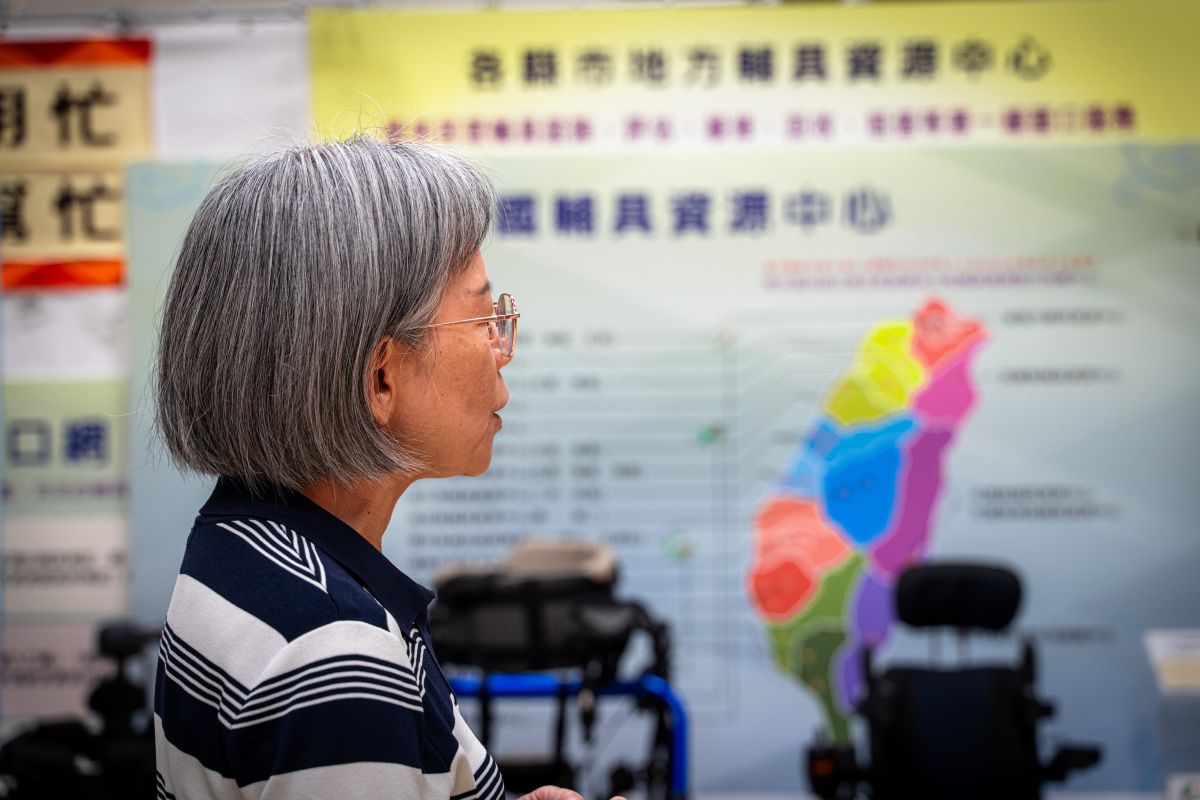
The Research Center utilizes NYCU’s interdisciplinary expertise to advance assistive technology and provide accessible solutions for elderly care. (Photo from ZDunemployed studio)
全台規模最大!解決生活問題的銀髮長照產業盛會
The biggest exhibition for long-term care in Taiwan is coming!
🔔ATLife 2024臺灣輔具暨長期照護大展
🔔Assistive Technology for Life 2024
🔔2024年展覽主軸
🔔Theme of 2024
✨永續未來 X 普惠高齡 X 數位加值
✨Sustainable & Digital Future for Silver Generation
🔎 2024 亮點搶先看
🔎 2024 Highlights
🚩最多元!【銀髮長照園區】一站獲取10大銀髮長照新訊
🚩Elderly Living and Long-term Care Pavilion
10 professional themes about care solutions in the areas of eating, clothing, housing, mobility, education, leisure, and end-of-life preparation.
🚩最專業!全台唯一【長照租賃輔具精品獎】評選
🚩Taiwan Excellence Award for Long-term Care Rental Aids
Get the latest development, application, and rental service information of ourstanding assistive devices.
🚩最實用!展場限量免費發放【12大樂齡長照需求手冊】
🚩Free Carers Guides-12Qs
Annual long-term care solutions brochure sort by 12 needs, limited FREE supply only at ATLife!
🚩最豐富!多場專業【政策與產業論壇】
🚩Policy Seminar & Industry Forums
A perfect stage for numerous fora, seminars and networking events related to the long-term care and assistive devices industries.
還有更多最新銀髮長照資訊,都在ATLife!
And…more to be unveiled in ATLife 2024!
ATLife 2024臺灣輔具暨長期照護大展
Assistive Technology for Life 2024
📅 5/16(四)-19(日)
📅16-19 May, 2024
🏠台北南港展覽館1館1F
🏠Taipei Nangang Exhibition Center Hall 1, Taipei
⚠️https://www.chanchao.com.tw/ATLife/
⚠️https://www.chanchao.com.tw/ATLife/en/
「開幕典禮」暨「台灣長照租賃輔具精品獎 頒獎典禮」
現場貴賓雲集,由主辦單位國立陽明交通大學 ICF 暨輔助科技研究中心李淑貞主任,與賴清德副總統開場致詞,以及超過 80 位重量級貴賓出席開幕典禮,包含行政院林萬億政務委員、衛生福利部王必勝政務次長、衛生福利部長期照顧司祝健芳司長、衛生福利部社會及家庭署張美美副署長、經濟部工業局周崇斌主任秘書、經濟部國際貿易局戴婉蓉主任秘書、內政部營建署陳興隆副處長、內政部建築研究所王榮進所長、數位發展部數位產業署呂正華署長、臺北市政府社會局周榆修局長、國立陽明交通大學蔚順華副校長…等,及來自世界各國大使館、辦事處、金融界與產業協會代表出席。
2023年更舉辦首屆「臺灣長照租賃輔具精品獎」評選,特別跨海邀請日本介護保險福祉用具給支付首席顧問專家 The Association for Technical Aids ATA 五島清國部長加入評審團,評選出優選 12 家廠商、 26 項產品,與佳作 18 家廠商、 28 項產品於現場頒獎,為臺灣輔具產業加速升級轉型,進而帶動高齡科技產業發展的巨大社會與經濟效益 。
2023 ATLife 台灣輔具暨長期照護大展暨長照租賃輔具精品獎 盛大登場!ATLife 2023 GREAT Opened!
李淑貞主任提及台灣長照輔具租賃議題談論了10多年。政府自2012年起陸續委國立陽明交通大學ICF暨輔助科技研究中心進行數個研究規劃,最近一次是2020年,可惜因疫情及各方複雜因素影響而擱置。今年重啟討論,為配合政府政策發展,特別於1月邀請日本首席專家The Association for Technical Aids(ATA)部長 五島清國來台舉辦3場國際研討會,由五島部長分享日本介護保險政策施行20多年帶動輔具產業發展與社會及經濟效益之經驗,並分析長照租賃輔具市場勝出策略,提供台灣廠商未來最實務參與長照輔具租賃服務之參考。